
Last updated November 15, 2026
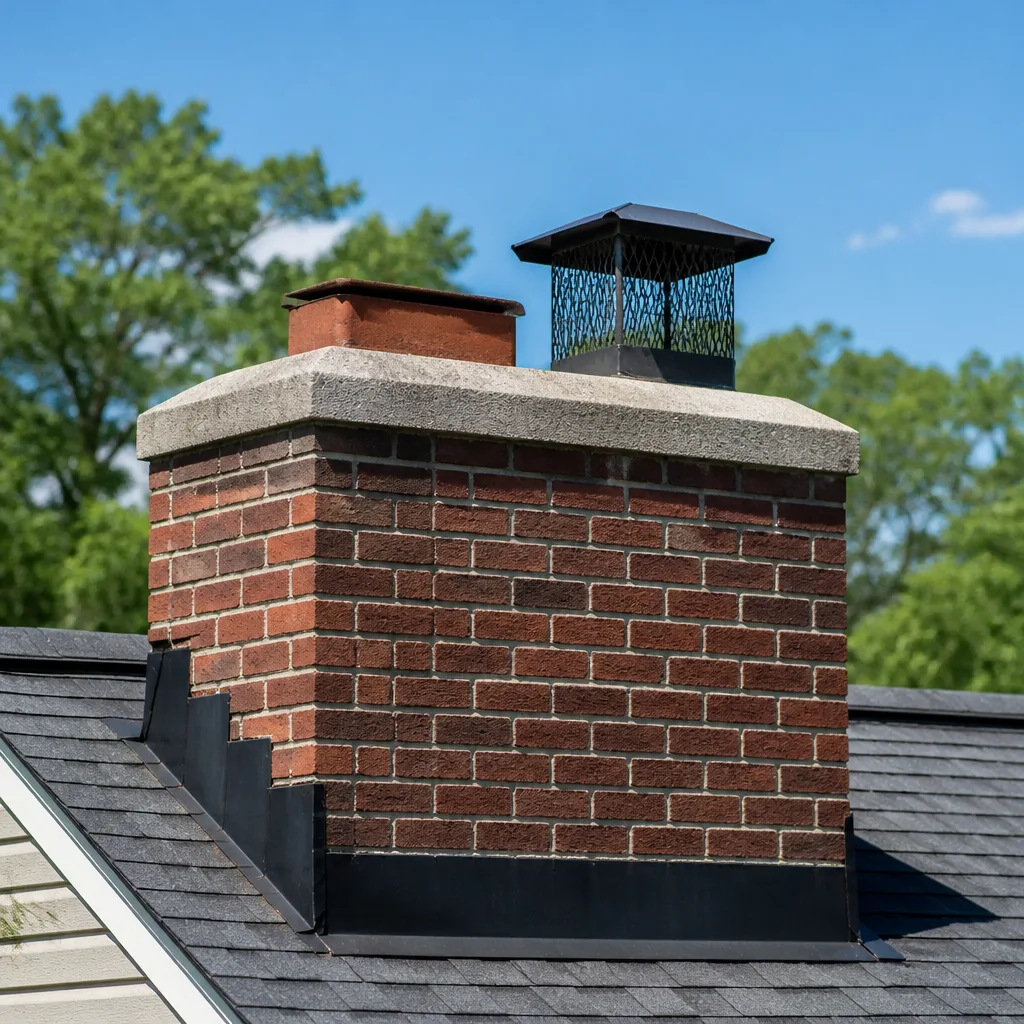 Sweep & inspection
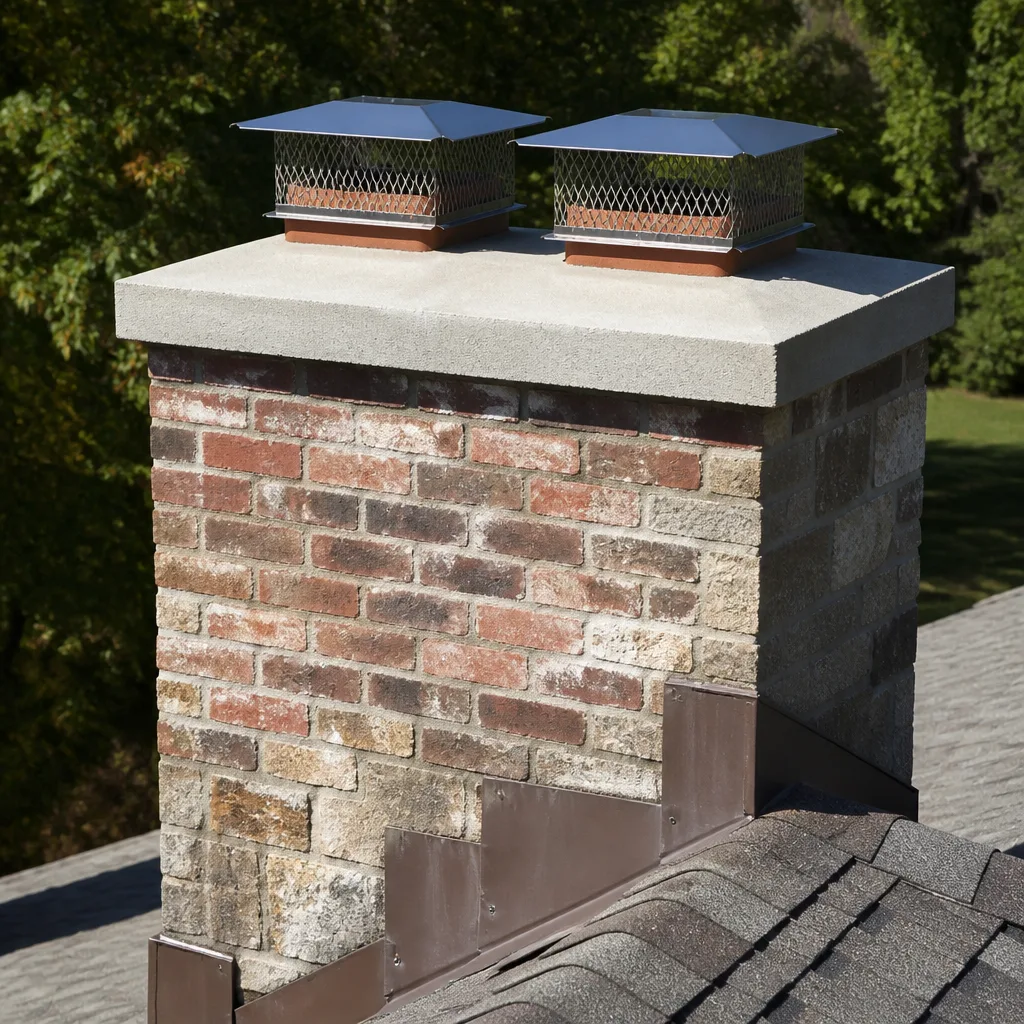 Caps & crowns
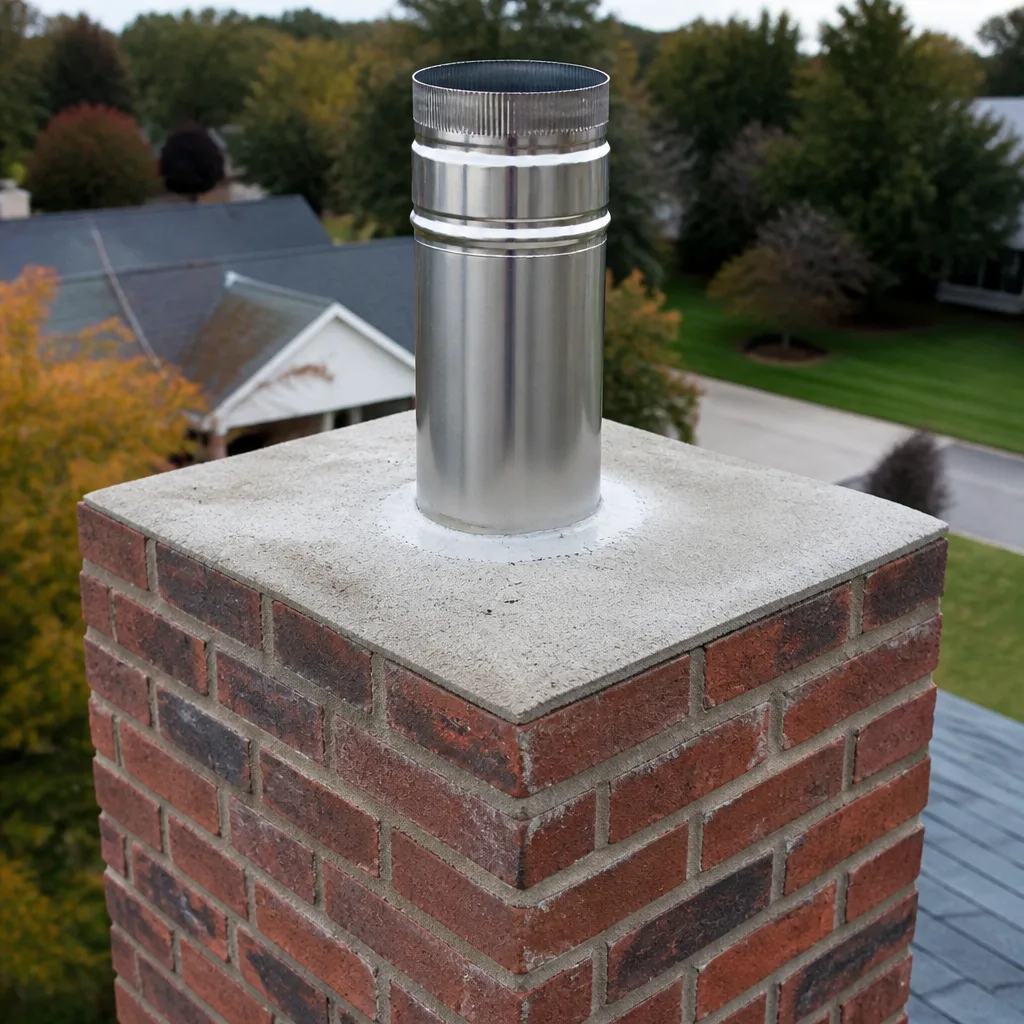 Flue relining
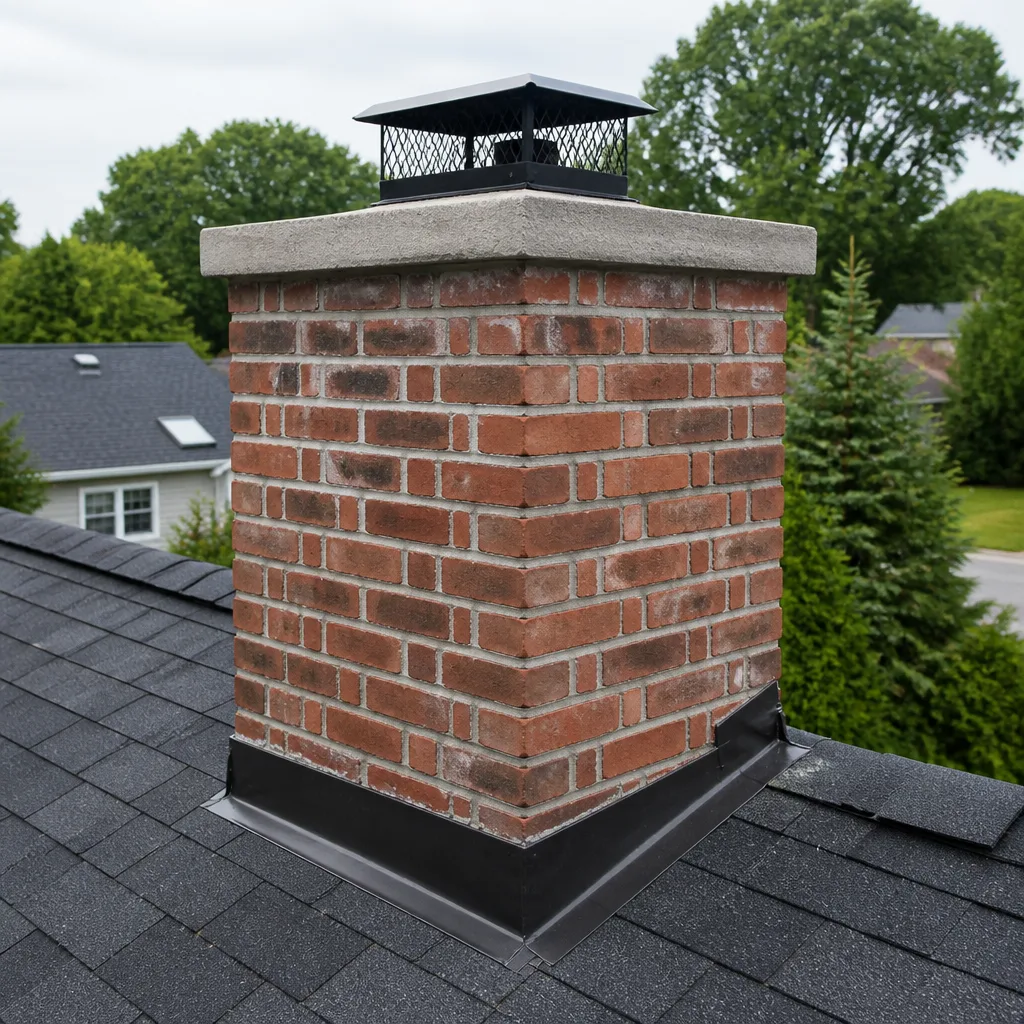 Masonry repair
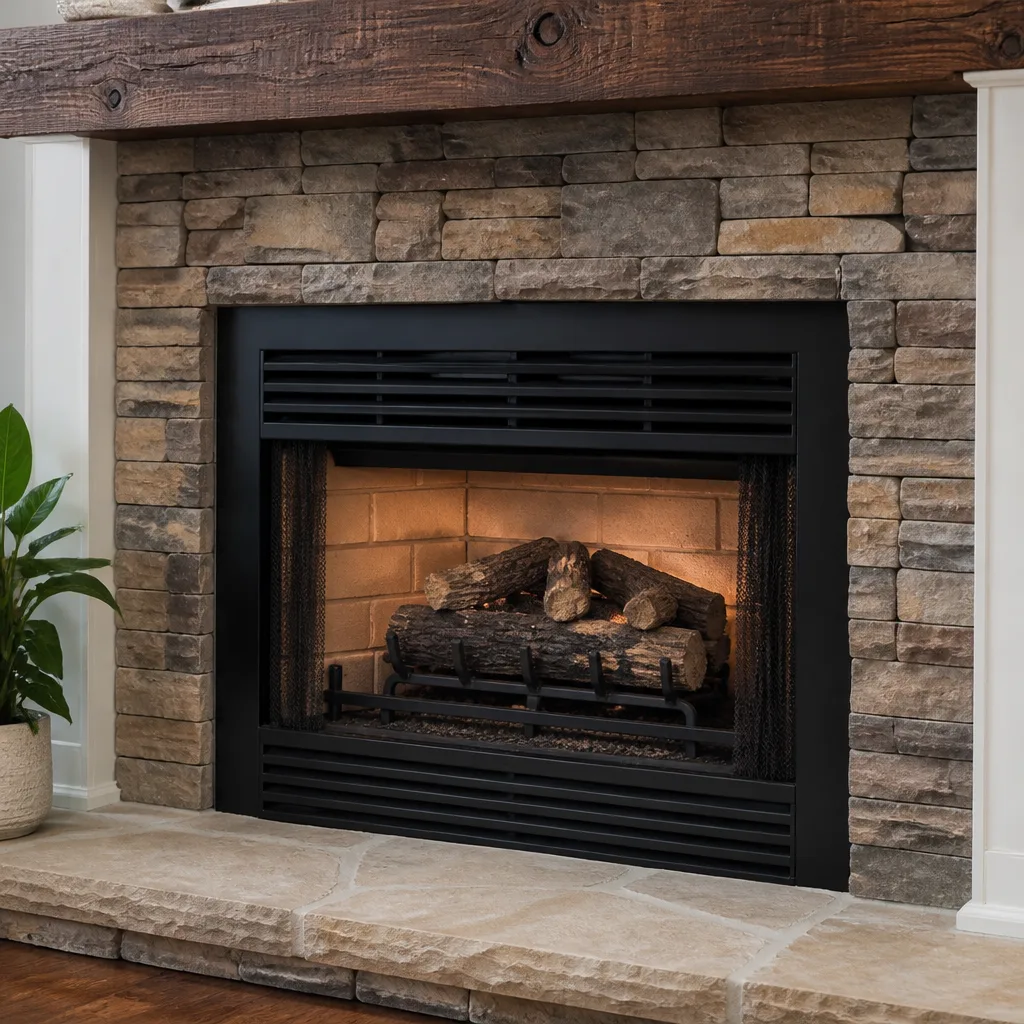 Gas fireplace service
Level 1 sweep and inspection to the NFPA 211 annual standard - flue, crown, cap, and flashing checked and photographed
Chimney sweep logs do not sweep chimneys. They loosen some creosote - which then falls where a brush and vacuum still have to collect it.
DIY vs Professional Chimney Cleaning: The Kansas City Homeowner’s Decision Guide
You can buy the same brushes a professional uses. That part of chimney cleaning is not secret, and nobody has a monopoly on a polypropylene rod with a stiff bristle head. What you can’t buy at the hardware store is the ability to recognize Stage 3 glazed creosote that has baked onto the flue wall like glass and won’t come off with any brush, or to spot a hairline crack in a liner tile sitting underneath the soot you just swept away. The DIY-versus-pro question gets framed as a cost argument, and that framing misses the point: home cleaning is a mechanical act, while an inspection is a diagnostic one. This guide explains exactly what a Kansas City homeowner can safely do, what genuinely deserves a trained eye, and how to use both without wasting money.
Quick Answer
DIY chimney brushing is reasonable for light maintenance on a system that has been recently inspected and cleared by a professional, but it cannot substitute for a real inspection, and it is genuinely unsafe for gas venting systems or any chimney with known liner damage. A professional sweep at a typical Kansas City home costs $150 to $400 depending on the liner type and access, includes camera inspection and a written report, and is the only way to know what your deposits are sitting on. Brush the easy deposits if you want; get the diagnostic eye once a year.
Styles & brands we work with
- Sweep & inspection
- Caps & crowns
- Flue relining
- Masonry repair
- Gas fireplace service
Table of Contents
- What DIY Brushing Can Actually Accomplish
- What DIY Brushing Cannot Do
- The Three Deposit Types and Which Ones Brush Off
- What a Competent DIY Kit Actually Costs
- The Liability Question Kansas City Homeowners Forget
- When DIY Is Reasonable and When It Isn’t
- Using DIY as Supplemental Maintenance Between Inspections
- How Kansas City Climate and Housing Affect Your Chimney
What DIY Brushing Can Actually Accomplish
A homeowner with the right brush and rods can remove loose soot and dry, flaky creosote from the accessible portion of a flue. That is a real and useful thing. If you burn a few cords of wood a season and you’re brushing out fluffy soot between visits, you’re reducing the fuel load on the flue wall in the same way a professional’s first pass does. It is honest, useful work, and no sweep should tell you it’s meaningless.
What brushing accomplishes, specifically:
- Removes soft, dry, powdery soot from the flue walls.
- Removes first-degree creosote, which is the flaky, brittle, soot-like deposit that brushes off cleanly.
- Knocks down cobwebs, nesting material, and light bird debris from an open flue.
- Reduces the immediate fuel available to ignite during a chimney fire.
- Gives you a direct look at the visible portion of the flue from the top or bottom.
Notice that none of these involve evaluating condition. A brush pass tells you the flue is now cleaner. It does not tell you whether the flue was safe before you started, and it cannot tell you anything about what’s happening on the other side of the liner tile, in the smoke chamber, or at the flue collar where the appliance connects. Those are the diagnostic zones, and they’re where most real problems live in Kansas City homes. Our chimney sweep work is built around that diagnostic zone for exactly this reason.
What DIY Brushing Cannot Do
Here’s the part most DIY guides skip. A brush is a mechanical tool, and the deposits that cause the worst chimney fires are not mechanical problems. They’re chemical ones. Stage 3 glazed creosote is a hardened, tar-like deposit that forms when creosote vapors condense and then get repeatedly reheated, essentially baking into a glass-like shell on the flue wall. It does not come off with brushing. A homeowner applying a stiff brush to glazed creosote will either bounce off it or scratch the surface and leave the bulk of the deposit exactly where it was.
What a professional sweep does that a DIY brush pass cannot:
- Identify deposit grade. A sweep visually grades creosote and knows which grades require chemical treatment (a creosote-specific solvent applied and allowed to dwell) versus mechanical removal with specific rotary tools.
- Run a camera. A small video camera lowered down the flue reveals cracks, offset tiles, gaps at joints, and the top of the smoke chamber, none of which are visible from either end of the flue with a brush light.
- Inspect the smoke chamber and damper. These areas accumulate deposits the brush never touches, and they’re a common origin point for chimney fires.
- Read the appliance. Gas inserts, wood stoves, and oil appliances each vent differently; a mismatch between appliance and flue is invisible to a brush.
- Document what they found. A written report with photos is defensible in an insurance claim. A brushed flue with no record is not.
We’ve seen plenty of chimneys in Kansas City where the homeowner swept faithfully and the liner was still cracked, because the crack started on a joint that the brush glided past. That’s the diagnostic gap in a sentence.
The Three Deposit Types and Which Ones Brush Off
Creosote is graded in three stages, and the stage determines whether DIY brushing is even relevant. It helps to know which one you’re dealing with before you plan the weekend.
- Stage 1 (soot and flaky creosote): Soft, dusty, and easily removed with a brush. DIY-compatible if the flue is otherwise sound.
- Stage 2 (crusty, hardened creosote): A bumpy, brittle crust that sometimes requires specialized rotary tools and specific removal techniques. Brushing a Stage 2 flue with a standard poly brush tends to break off chunks that fall into the smoke shelf and stay there.
- Stage 3 (glazed creosote): Hard, shiny, tar-like, and often puddled. Requires chemical treatment to soften, followed by mechanical removal. This is the grade most associated with chimney fires, and brushing does essentially nothing to it.
You cannot reliably grade your own creosote without seeing it clearly and knowing what you’re looking at. A flashlight up the flue tells you roughly how much deposit there is; it doesn’t tell you whether what you’re seeing is Stage 1 or Stage 3, because both look dark from below. If the deposit has any sheen to it, stop brushing. That’s a call a professional owes you, and we make it during every sweep because the deposit grade determines whether the job is a routine cleaning or a chemical-and-tool procedure.
What a Competent DIY Kit Actually Costs
The cheap brush-and-rod kits sold online create a false savings calculation. A $29 kit typically includes a plastic-bristled brush too soft for a real cleaning, rods too short for a typical flue, and no PPE beyond a paper dust mask. If a homeowner is going to brush their own flue safely, the realistic tool list looks more like this:
| Item | Typical cost range |
|---|---|
| Stiff poly or wire chimney brush sized to the flue | $30 – $70 |
| Flexible fiberglass rods (enough to reach the full flue) | $80 – $160 |
| HEPA-rated respirator (not a paper dust mask) | $35 – $70 |
| Safety glasses and nitrile gloves | $15 – $30 |
| Drop cloths, roping plastic, tape for sealing the firebox | $25 – $50 |
| Powerful work light and mirrored inspection tool | $25 – $60 |
| Shop vacuum with fine-dust filter (optional but typical) | $90 – $200 |
Total realistic spend for a competent home setup lands somewhere between $300 and $640. A professional sweep in Kansas City typically runs $150 to $400 depending on the system. If the reasoning for DIY was purely cost, the math almost never works in the homeowner’s favor on the first job, and barely breaks even on the second. The kits that don’t cross that threshold typically don’t clean a flue properly either. We’re not against homeowners owning a brush. We’re against the cost argument being used to justify a pass that doesn’t actually do what a professional pass does.
The Liability Question Kansas City Homeowners Forget
This is the section that rarely appears in DIY guides. When a homeowner brushes their own flue, inspects it by looking up from below, and considers the job done, they’ve effectively self-certified the chimney as clean and serviceable. If a chimney fire happens afterward, that self-certification becomes relevant. Not because brushing causes the fire, but because the insurance claims process will want to know what condition the flue was actually in and what documentation exists.
Most home insurance policies carry a chimney-related condition or exclusion clause. After a chimney fire or flue failure, an adjuster may ask for proof of maintenance. A professional sweep report with photos and a written summary of the liner condition is a defensible document. A homeowner’s own memory of brushing it out is not. In our experience working with Kansas City homeowners navigating claims, the difference between a routine annual report and nothing at all is often the difference between a straightforward settlement and a complicated one.
The same logic applies before any home sale. Buyers’ inspectors flag unmaintained chimneys consistently, and a documented professional sweep history is the fastest way to close that question. We can also work with your insurer during a claim, providing the inspection documentation they need.
When DIY Is Reasonable and When It Isn’t
There is a genuinely reasonable DIY window, and it’s narrower than most homeowners assume. It helps to spell it out plainly.
DIY is reasonable when:
- The system has been professionally inspected within the last year, and the inspection came back clear.
- You burn seasoned wood and can see that the deposit in the flue is Stage 1 (soot or flaky, non-glossy creosote).
- You’re brushing between the annual professional visits for maintenance, not in place of them.
- You have a stiff poly brush sized to the flue, fiberglass rods, proper PPE, and sealed drop cloths to contain the dust.
- The chimney has a straight, accessible flue with no known damage.
DIY is not safe when:
- The system is venting a gas appliance. Gas venting depends on precise draft; a homeowner brushing can disturb a flue that was functioning correctly, and the diagnostic signs of a draft problem aren’t visible during a brush pass.
- Any liner damage has been confirmed or suspected. Brushing past a compromised liner can worsen it. A damaged liner is a structural problem, not a cleaning problem, and the fix (stainless steel relining with DuraFlex or resurfacing with HeatShield) is entirely outside a brush’s reach.
- The deposit has any glossy, hardened, Stage 3 appearance.
- There’s a significant accumulation of Stage 2 crust that broke off and dropped into the smoke chamber during a DIY attempt.
- The chimney is unlined or has an older clay liner with multiple offset joints.
We’d rather tell homeowners “your system is clear, brush it lightly in February and call us next fall” than sell an unnecessary sweep. But we’d also rather say clearly that gas venting, damaged liners, and glazed deposits are outside the DIY perimeter. Those are the cases where the wrong call can hurt someone.
Using DIY as Supplemental Maintenance Between Inspections
Here’s the model that actually works for the homeowner who wants to stay involved with their system. DIY brushing is best treated as maintenance between professional appointments, not as a substitute for them.
- Book the professional sweep first. Ideally at the end of the burning season or at the end of summer, before the first fire. The sweep gets the flue fully clean, documents the liner condition, and tells you what grade of deposit your burning habits produce.
- Brush lightly once mid-season. If you burn heavily (more than two cords a season), a light brush pass after the first month of regular fires keeps the Stage 1 deposit from building. Use the same brush and rods a professional would, not a soft bristle kit.
- Watch for deposit grade changes. If your mid-season brush pass starts hitting hard, glossy material, stop. That’s the signal to call a sweep earlier than planned, not to keep brushing harder.
- Book the next professional sweep on schedule. A year between professional inspections is the standard for a well-maintained wood system. Gas and oil venting get inspected more frequently; ask during the last visit for the interval that fits your appliance.
- Keep the reports. File each professional inspection report with your home maintenance records. They’re the documentation an insurer or a buyer will want to see.
Used this way, DIY brushing is a genuine fire-safety supplement. It extends the value of the professional visit between appointments and gives you an early warning if the system is producing more than it should. Used as a full substitute, it papers over the diagnostic question and quietly moves the homeowner into the “self-certified, undocumented” category. The difference is entirely about the frame, not the brush.
How Kansas City Climate and Housing Affect Your Chimney
Chimney condition is not the same in every city, and Kansas City has characteristics that matter. The heating season here runs long and swings hard, with frequent freeze-thaw cycles that stress masonry. Old brick chimneys in neighborhoods like Strawberry Hill and the older parts of Wyandotte County get repeatedly wet and dried through the winter, and that cycling opens cracks in mortar joints and spalls brick faces that then show up as liner problems. It’s not a cosmetic issue; it’s a structural one.
Kansas City’s clay soils are expansive, meaning they swell and shrink with moisture content. That movement puts stress on chimney foundations and on the mortar joints in older chimneys, and it can open gaps between flue tiles that a camera catches and a brush pass does not. If your chimney sits on the west side of the house where the winter wind drives rain against it, the exterior is likelier to show spalling and the crown is likelier to crack.
Kansas City’s housing stock is a factor, too. Many homes here have masonry chimneys originally built for wood fireplaces that now vent gas inserts or freestanding stoves. That mismatch matters, because a gas appliance venting into an oversized flue built for wood can produce condensation that eats masonry, and no amount of brushing fixes the sizing problem. A professional sweep sees the mismatch and tells you what to do about it. If you’re in the Kansas City, KS side of the metro, our team handles Kansas City work directly and sees these patterns regularly.
One practical note: Kansas City’s burning season is also its creosote-production season. A homeowner burning well-seasoned hardwood produces less deposit than one burning unseasoned wood or running a stove at low output, and the difference shows up in the deposit grade. That’s a burning-practices lesson best learned from a sweep who can grade what your habits produced.
Common Mistakes to Avoid
- Buying a soft-bristle kit and calling it a sweep. A kit with plastic bristles doesn’t remove deposit from the flue wall the way a stiff poly or wire brush does. It removes the loosest soot and leaves the rest in place, giving a false sense of a clean chimney.
- Brushing without sealing the firebox. Without roping plastic and tape around the firebox opening, you’ll distribute soot and fine dust throughout the living space. It’s a mess for weeks, and it’s entirely avoidable.
- Skipping eye and respiratory protection. Chimney dust contains fine soot particles. A paper dust mask doesn’t hold up; a HEPA-rated respirator and sealed safety glasses do.
- Brushing a gas venting system. Gas flues depend on precise draft, and brushing can disturb it. This is a case where the diagnostic tooling a professional sweep brings is doing the real work, not the brush.
- Self-certifying a clean chimney without a camera or a written report. A clean-looking flue with a cracked liner tile behind the soot is not a clean chimney in any sense an insurer will accept.
- Sweeping as a substitute for the annual inspection. Cleaning and inspecting are two different services, and the inspection is the one that catches the problem you actually need to catch.
- Ignoring the dryer vent. A homeowner who takes their chimney maintenance seriously often overlooks the other major residential fire risk in the house. Lint buildup in a dryer vent is a separate fire hazard, and we offer dryer vent cleaning alongside chimney work so both are covered.
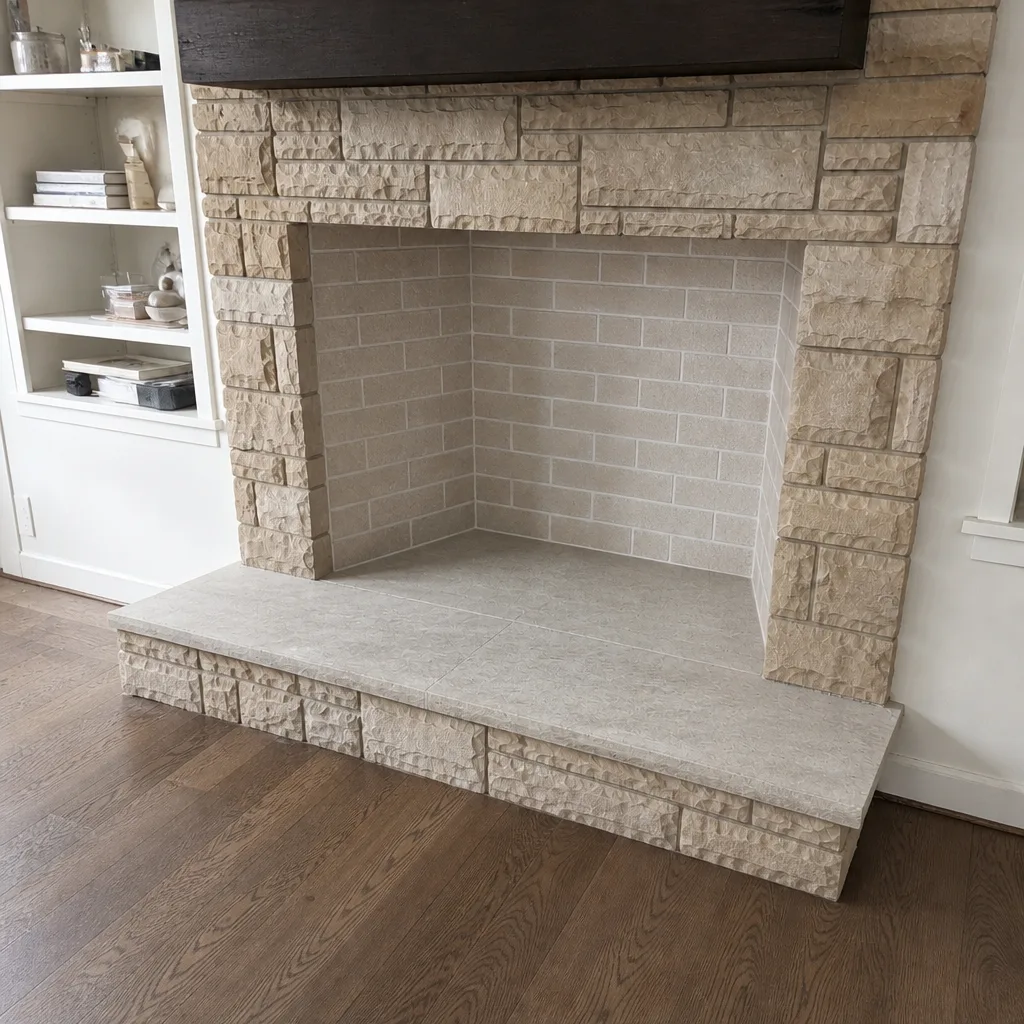
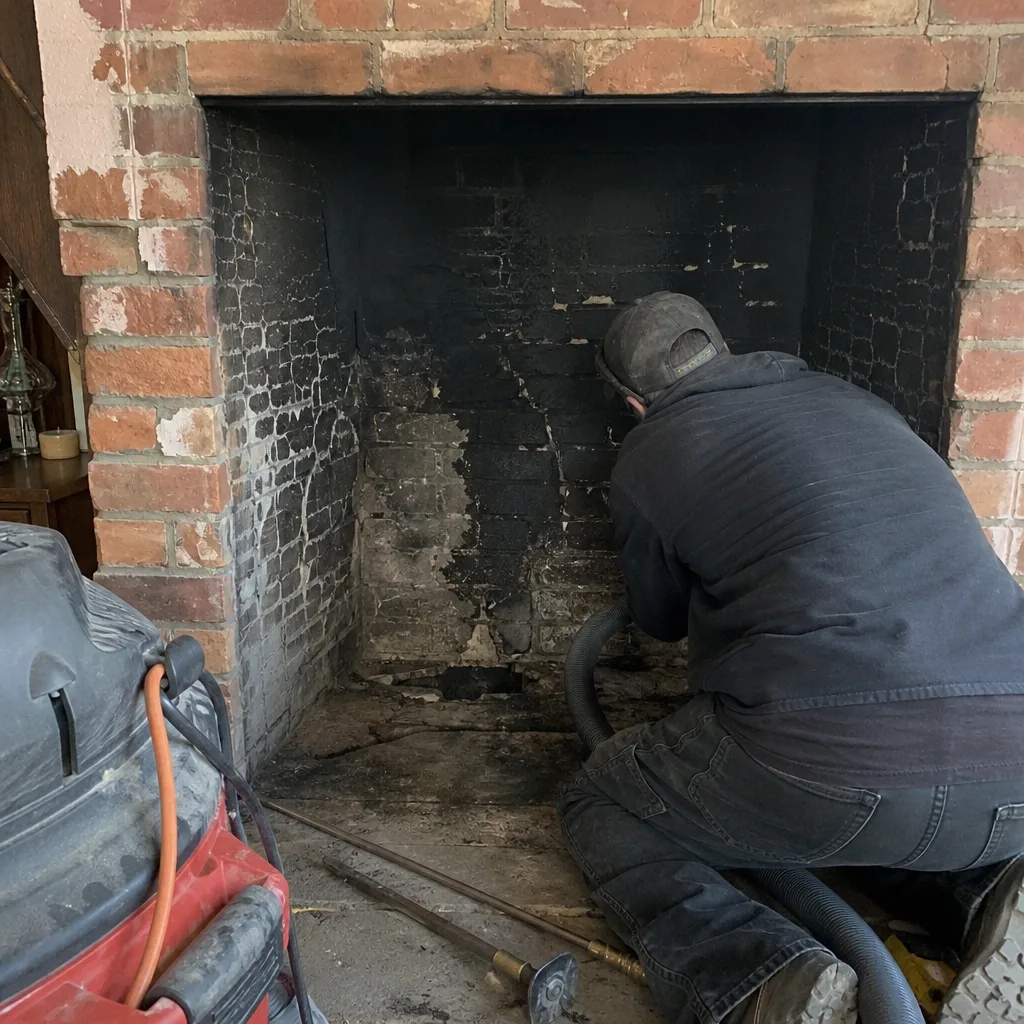
See the difference
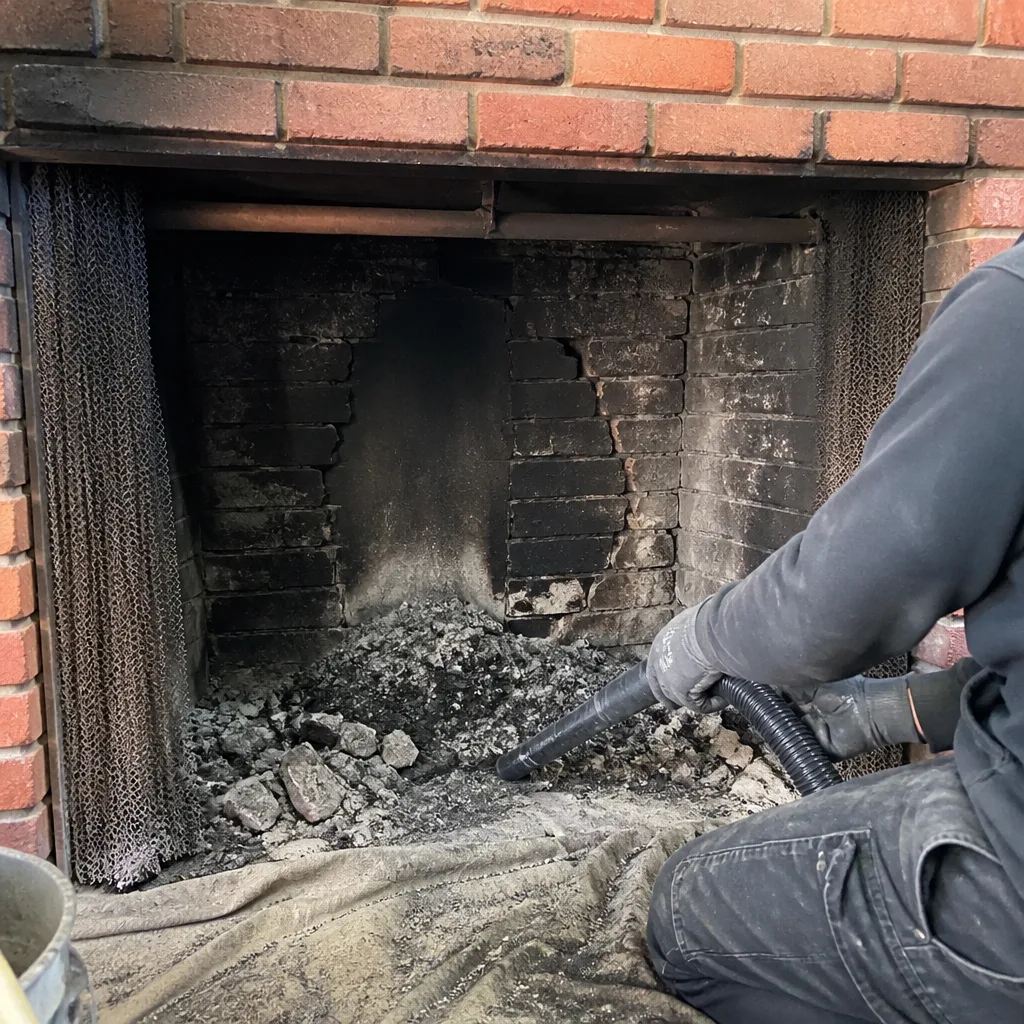 Before
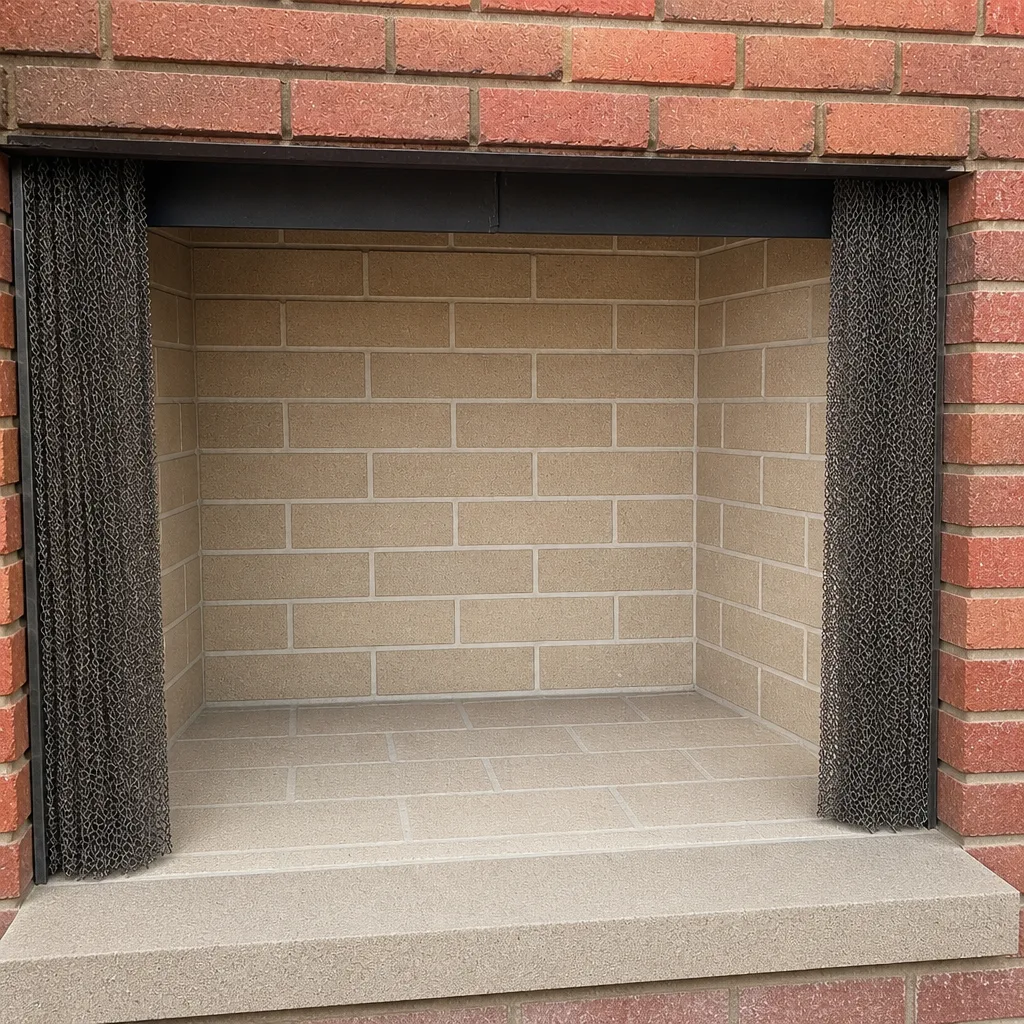 After
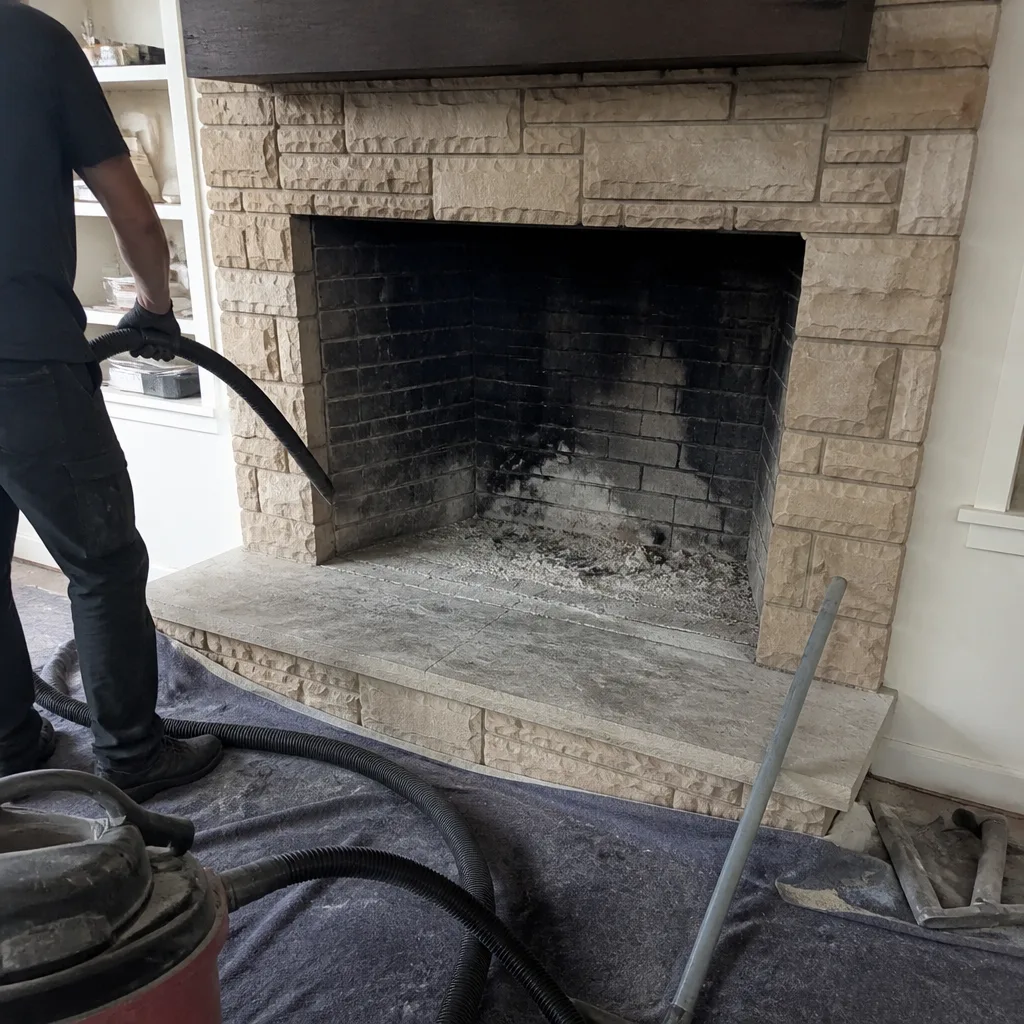 Before
 After
 Before
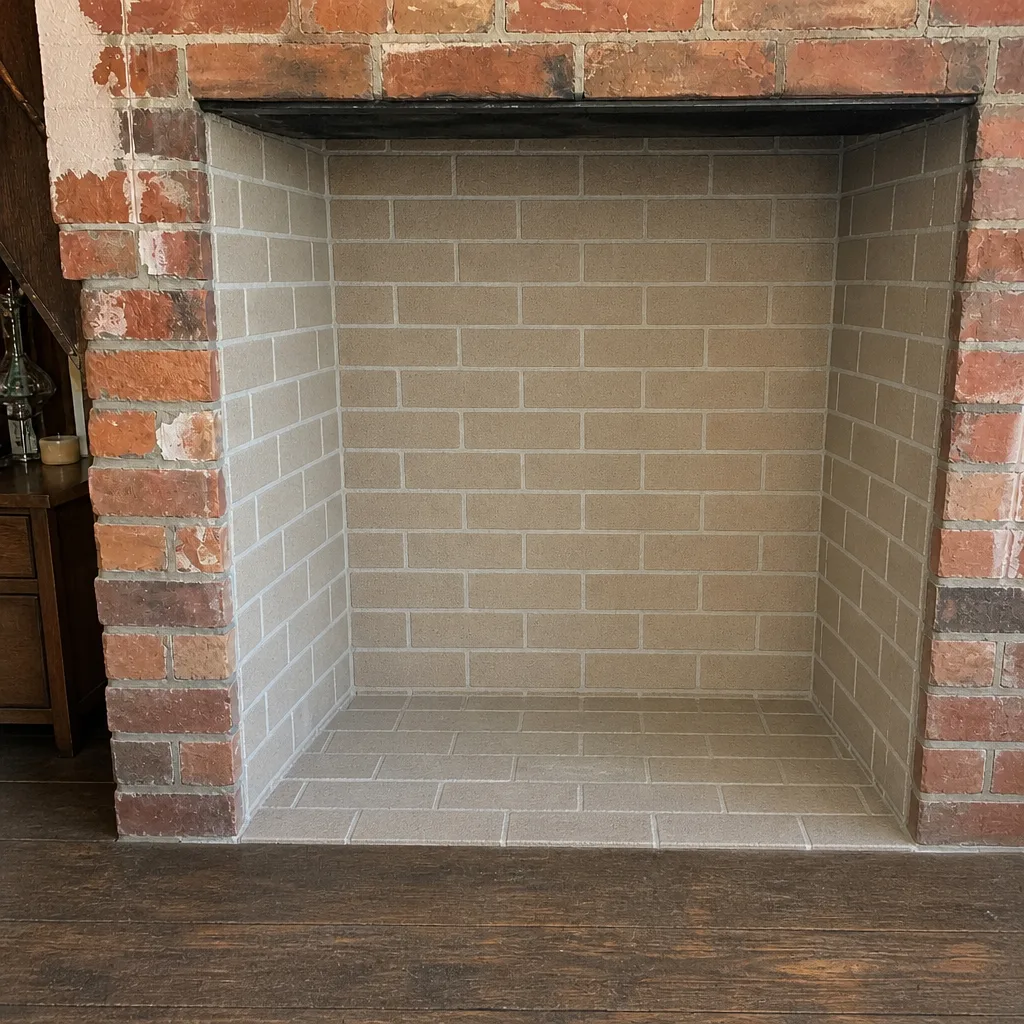 After
When to Call a Professional
Call a professional at any of these points: you’ve never had the chimney inspected and don’t know the liner condition; you see or smell any hardened, glossy deposit; the system vents gas or oil; you noticed damage to the firebox, smoke chamber, or outer masonry; you’re buying or selling the home; or your last inspection was more than a year ago. Also call if a DIY attempt dislodged visible chunks of creosote you couldn’t retrieve from the smoke shelf, or if you can’t confidently identify what you’re looking at from below. Below that list, a professional sweep once a year is the baseline. Our technicians have up to 12 years of experience grading deposits, running cameras, and reading the actual condition of the liner and smoke chamber. Kansas City Chimney Cleaning offers free estimates in Kansas City, and we’re glad to tell you your system is fine if that’s the honest answer. Call (866) 480-2930 to book.
Frequently Asked Questions
You can clean it, but you can’t skip the sweep. The mechanical removal of soot and light creosote is the part you can do; the assessment of deposit grade, liner condition, and smoke chamber condition is the part you cannot, and it’s the more important part. Brushing gives you a cleaner flue and no diagnostic information. The professional sweep gives you both. Use DIY as maintenance between annual sweeps, not in place of them.
A realistic DIY setup with a proper stiff brush, full-length rods, HEPA respirator, safety gear, sealing materials, and a work light runs about $300 to $640, while a professional sweep in Kansas City typically runs $150 to $400 depending on the liner type and access. The savings math rarely works on a first DIY attempt, and the first attempt also skips the inspection. Call (866) 480-2930 for an exact quote; estimates are free.
You look for gloss. Stage 1 creosote (soot and flaky deposit) doesn’t shine and brushes off cleanly. Stage 2 (crusty and hardened) and Stage 3 (glazed, tar-like) both show a hard, sometimes shiny surface, and neither responds to a standard brush. If you can see any sheen or glassy texture in the flue, stop and call a professional. Grading deposit is a professional judgment, not a homeowner guess, and the wrong grade is the fire risk.
Yes, it can be. A brush can dislodge loose liner material and worsen a crack or a gap between tiles, and it can push it into the flue where it becomes a blockage or a hot spot. More importantly, brushing over a damaged liner does nothing to fix the damage, and the homeowner walks away believing the chimney is fine. A confirmed or suspected liner issue is a repair job. Our repair work covers the full structural scope, including stainless-steel relining with DuraFlex and resurfacing with HeatShield when the liner is a candidate for restoration rather than replacement.
Cleaning removes deposits; inspecting evaluates condition. A sweep can technically clean a flue without lifting a camera, but any real inspection involves checking the liner top to bottom, the smoke chamber, the damper, the firebox, and the appliance connection. The camera and the written report are what turn a cleaning into an inspection. When we schedule a Kansas City chimney cleaning, the inspection is built in, because cleaning without an inspection is only doing the easy half.
Once a year for a wood-burning fireplace or stove is the standard baseline, and more often if you burn heavily or notice deposit building. Gas and oil venting typically gets inspected on a shorter interval, and your sweep will tell you what fits your appliance. Kansas City’s long, hard heating season and the wide swings of temperature produce more deposit and more masonry stress than milder climates, which is one of several reasons a yearly professional sweep is the practical baseline here.
It can if the brush is the wrong size or type, if the rods are too stiff and a homeowner forces them past an obstruction, or if the liner is already compromised. A properly sized stiff poly brush used with reasonable force on a sound clay or metal liner is generally safe. The risk comes from the unknown condition of the liner on a system that hasn’t been professionally inspected. That’s one reason we recommend the professional inspection first; then home brushing between visits is a much safer proposition.
What happens if I skip chimney maintenance entirely?
Deposit accumulates, draft degrades, and the fuel load on the flue wall rises with each season. The failure point is unpredictable. A small deposit is harmless; a heavy one is the fuel for a chimney fire, and a compromised liner turns a chimney fire into a house fire. Carbon monoxide produced by a blocked or damaged flue is a second risk that doesn’t announce itself. We don’t say this to alarm anyone. We say it because the cost of a sweep against the cost of a preventable fire is not a close comparison.
The Bottom Line
DIY chimney brushing is a genuine maintenance tool, not a substitute for the professional inspection that actually protects your home. A homeowner with the right brush, rods, and PPE can keep Stage 1 deposit under control between visits and save money doing it. But a brush cannot grade a deposit, cannot see a liner crack, cannot diagnose a gas draft problem, and cannot produce the documented report that matters at claim time. In Kansas City, the annual professional sweep is the baseline, and home brushing is the supplement between sweeps. If your system has never been inspected, or you can’t identify what’s on the flue wall, start with a professional visit. Our technicians have up to 12 years of experience, and we use purpose-built parts from Copperfield and Gelco on every job, not generic substitutes. We handle the full range from routine sweep to structural repair. Call (866) 480-2930 for a free estimate. We answer 24/7. Fast dispatch from 7am to 7pm, Sunday through Friday.
Written by the team at Kansas City Chimney Cleaning.