
Last updated November 15, 2026
 Sweep & inspection
 Caps & crowns
 Flue relining
 Masonry repair
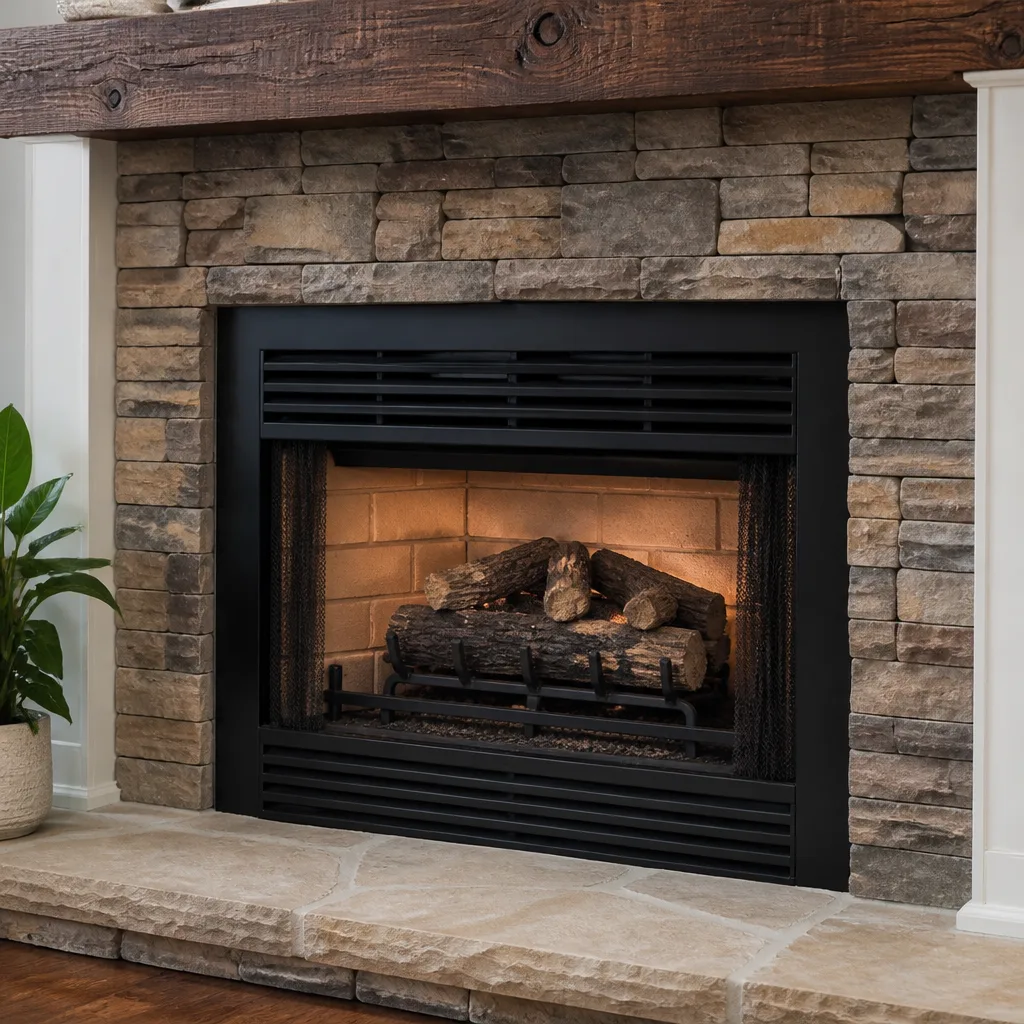 Gas fireplace service
Level 1 sweep and inspection to the NFPA 211 annual standard - flue, crown, cap, and flashing checked and photographed
Chimney sweep logs do not sweep chimneys. They loosen some creosote - which then falls where a brush and vacuum still have to collect it.
Chimney Sweep Maintenance Schedule: What to Do and When
The most common advice about chimney maintenance is also the most misleading: sweep once a year and you’re fine. That annual rule was written for average use, and almost nobody’s chimney is average. A Kansas City homeowner burning seasoned hardwood three nights a week in a thirty-year-old clay-tile fireplace is running a completely different risk profile than someone with a gas insert they light twice a season. Creosote doesn’t accumulate on a calendar; it accumulates on fuel, burn frequency, appliance type, and what your liner is made of. In this guide, we’ll give you a decision tree for building a maintenance timeline that matches how your system is actually used, including the Kansas City climate quirks that shift the national guidance.
Quick Answer
The national standard is an annual inspection for every chimney, with sweeping whenever the inspection finds enough creosote buildup (typically 1/8 inch or more). In practice, that means heavy wood burners should expect a sweep every year, moderate burners every 2-3 years, and gas appliance owners still need an annual inspection even though there’s no creosote to sweep. In Kansas City, the wet-spring-and-freeze-thaw cycle makes fall inspections especially important because moisture damage can hide behind a clean-looking flue.
Styles & brands we work with
- Sweep & inspection
- Caps & crowns
- Flue relining
- Masonry repair
- Gas fireplace service
Table of Contents
- Why the “Once a Year” Rule Falls Short
- Fuel Type: How Creosote Accumulates Differently
- Gas Appliances Still Need Inspection
- Seasonal Checklist: Homeowner vs. Technician Tasks
- How Kansas City’s Climate Changes the Window
- Liner Material and Inspection Frequency
- Building Your Own Schedule: The Decision Tree
- Common Mistakes to Avoid
Why the “Once a Year” Rule Falls Short
The annual inspection recommendation was never meant to be a universal sweeping schedule. It’s an inspection standard. The important distinction: an inspection tells you whether the chimney needs sweeping right now, while a sweep is what you do once the inspection has already confirmed it’s needed. Most homeowners collapse those two into one annual event and skip the inspection on the years they skip the sweep, which is exactly when small problems become structural ones.
The danger of a fixed schedule isn’t that it’s too aggressive; it’s that it’s often too lenient. A homeowner who burns a full cord of seasoned oak every winter will hit the 1/8-inch creosote threshold well before twelve months pass. Someone else might not cross it for three years. The right question isn’t “how often should a chimney be swept?” but “how fast does this specific system produce the condition that makes sweeping necessary?”
In our experience across Kansas City homes, three variables dominate the answer:
- Fuel type – hardwoods, softwoods, and manufactured logs produce very different creosote loads.
- Burn frequency and intensity – a fire a week is not a fire a day.
- Appliance and liner – a modern stainless steel liner sheds creosote differently than an older unlined flue or clay tile stack.
A chimney sweep in Kansas City is diagnostic work, not just a cleaning. A technician who only scrubs the flue and doesn’t tell you how the creosote formed, and what that says about your burn habits, is only doing half the job. The full picture (creosote depth, liner condition, cap integrity, damper operation) is what turns a one-time sweep into a real maintenance schedule.
Fuel Type: How Creosote Accumulates Differently
Creosote forms when volatile gases from burning wood condense on cooler flue surfaces before they can escape. Wet wood, restricted air, and cool flues all push more of those gases into the condensation zone. So the same number of fires per season can produce very different flue conditions depending on what’s going into the firebox.
Seasoned Hardwood (Oak, Maple, Ash)
Seasoned hardwood burns hot and complete, leaving less unburned fuel to condense. Realistic sweep frequency for a household burning seasoned hardwood in a fireplace several times a week: every 12-18 months. If you’re burning nearly daily through the Kansas City winter, plan on annual sweeps. Less than once a week, every 2-3 years is often enough after inspection confirms it.
Softwood (Pine, Fir, Cedar)
Softwoods carry more resin and burn faster and cooler. A lot of people burn pine on mild nights because it lights quickly, and it produces stiffer, flakier creosote (the crunchy kind) faster than hardwood. Expect a sweep every 12 months for households that run softwood more than a few times a week, and shorter if the fire is regularly smoldered overnight to keep coals going. Smoldering is the single highest-creosote habit we see.
Manufactured Logs
Dense manufactured logs burn consistently and leave less tar than wet wood, but they also produce more ash. Sweeping frequency stays in the 12-24 month range depending on how many logs per season, but ash removal between sweeps matters more. Manufactured logs are not a substitute for properly seasoned firewood in the creosote story; they’re just more predictable.
Mixed or Unknown
If you buy firewood from a landscape supplier or take downed trees, assume the moisture content is higher than it should be. Green wood is the number one driver of rapid creosote buildup, and a “seasoned” pile stored under a tarp on the ground holds more moisture than most people think. If you’re not sure how dry your wood is, plan on annual inspection until two burn seasons of your own experience tell you otherwise.
Gas Appliances Still Need Inspection
Gas fireplaces, inserts, and heating appliances don’t produce creosote, which leads many owners to skip maintenance entirely. That’s the most common mistake in the category. Gas appliance chimneys still accumulate issues that only an inspection catches, and most of them are slow and invisible from inside the house.
What we look for on a gas appliance inspection:
- Moisture in the flue – a gas flame produces a lot of water vapor. Cool flue surfaces and a slightly undersized or blocked vent cause condensation that degrades metal liners and masonry over time.
- Carbon monoxide venting – the whole point of the flue is to carry CO out of the house. A blocked or partially collapsed vent doesn’t announce itself. A CO alarm is a backup, not an inspection.
- Liner integrity – stainless steel liners in gas appliances are exposed to acidic condensate and can pit or seam-fail. Clay tile cracks.
- Bird and debris nests – yes, in gas chimneys too. A missing cap invites them in.
An annual inspection for a gas appliance usually takes less time than a wood-burning sweep because there’s no soot load. There’s no reason to skip it, and in our experience homeowners who do skip it for years tend to find more expensive problems when they finally do call. Gas appliance inspection frequency in Kansas City is the same as anywhere: once a year, no exceptions.
Seasonal Checklist: Homeowner vs. Technician Tasks
Understanding the split between what you can and should do yourself and what requires a trained technician keeps your schedule honest and prevents quiet problems from slipping through.
Homeowner tasks (safe, do them yourself)
- Check the firebox for obvious cracks, burned-through grates, or loose mortar before the first fire of the season.
- Verify the damper opens and closes fully, and that it stays open when it should.
- Inspect the chimney cap from the ground with binoculars (missing, dented, or loose caps are visible from the yard).
- Clear the area around the hearth, remove stored items from the firebox, and confirm the screen or glass door is intact.
- Test smoke and CO alarms, especially the CO alarm near the fireplace.
- After a heavy storm, glance at the roof flashing line for obvious gaps or displaced cap screen.
Technician tasks (do not DIY)
- Camera inspection of the full flue, the smoke chamber, and the damper assembly.
- Measuring creosote depth and identifying stage (light fluff, crunchy, or glazed) to decide whether sweeping clears it.
- Assessing liner condition: cracking, spalling, seam separation, or gaps that require a structural fix.
- Testing draft and venting on gas appliances.
- Any cleaning above the firebox, any masonry repair, and any work on the roof or chase top.
A glazed, tar-like creosote layer (stage three) is a fire hazard and requires professional tools to remove. We would never recommend that a homeowner attempt to scrape it out. And anything involving a ladder to the chimney top should be a trained-technician task, full stop. Roof work at height is where the serious injuries happen.
How Kansas City’s Climate Changes the Window
National chimney guidance assumes a fairly dry, cold, stable winter. A Kansas City winter is not that. We get wet springs, freeze-thaw swings through January and February, and summer humidity that soaks masonry if anything has been opened up. Each one pulls the maintenance window a little differently than the generic advice suggests.
Wet springs drive moisture damage
A chimney that absorbs water in April and May will show spalling brick, cracked crown mortar, and interior masonry damage by fall. That damage gets to work quietly, and it also lets moisture into the flue itself. Fall is when we find it. That’s why a late-summer pre-season inspection in Kansas City catches things a spring-only schedule never would.
Freeze-thaw drives crack development
Water that seeps into a mortar joint or a hairline clay-tile crack expands when it freezes. January and February produce dozens of freeze-thaw cycles, and each one widens existing damage. A chimney that was sound in November can have a visibly cracked flue by March. Post-season inspection has value for that reason alone.
The practical window
In Kansas City, we recommend two inspections a year for wood-burning households that burn regularly: late summer (before the burn season) and late spring (after it). For occasional burners and gas appliance owners, one inspection a year is enough, and the fall window is the ideal one because it precedes the season when problems matter most. Post-season inspection on occasional use is optional. Pre-season is not.
The typical Kansas City fall check-off also includes roof-level work that a chimney tech is already up there for. If you’re also dealing with dryer vent cleaning in the same home, bundling the inspection and the dryer vent makes sense because both are fire-safety tasks that homeowners defer for the same reasons.
Liner Material and Inspection Frequency
The liner is the most important structural component in the system, and its material determines both how often it needs eyes on it and what a failing one looks like. Three materials dominate Kansas City homes.
Clay Tile
Clay tile is the standard in older Kansas City construction. It’s durable but brittle, and it cracks from heat cycling and freeze-thaw. Failure looks like a hairline crack at a joint, a flaking surface (spalling), or a displaced tile. Inspect annually. A cracked clay tile lets heat into the surrounding structure, which is exactly the mechanism behind a chimney fire spreading into the framing.
Stainless Steel (DuraFlex and Similar Systems)
Pro-grade stainless steel liners resist heat and hold up to gas condensate far better than older metal. Inspection is still annual: seams can separate, corrosion can pit the metal, and the top connection can fail. A stainless liner in good condition is a reason to keep inspecting, not to skip it. We install DuraFlex liner systems because they’re engineered to hold up under wood, gas, and oil use, and the condition of the liner is something we can show you with camera evidence.
Cast-in-Place and Resurfaced Liners (HeatShield)
Cast-in-place insulation and HeatShield resurfacing restore damaged flues rather than replace them. These are proven systems, and when applied to the right condition they extend the life of a masonry chimney considerably. That’s not a free pass on inspection. Resurfaced liners can develop their own issues and should still be inspected annually. HeatShield is a cost-effective path we use when the damage pattern fits, and a full stainless reline is what we use when it doesn’t. The camera decides which path is right; assumptions don’t.
Whatever your liner material, the professional-grade brands on a repair job matter. DuraFlex, HeatShield, Olympia Chimney, and Gelco components are engineered for chimney conditions; hardware-store hardware isn’t. That’s a real difference when a cap, a top plate, or a flue connector needs replacing.
Building Your Own Schedule: The Decision Tree
Here’s how to translate everything above into an actual calendar for your home. Answer the questions in order.
Step 1 – What is your appliance?
- Wood-burning fireplace or insert: continue to step 2.
- Gas appliance: annual inspection only. No creosote sweep unless inspection finds an obstruction or debris.
- Oil appliance: annual inspection and annual cleaning. Oil soot is different from wood creosote and always needs attention.
Step 2 – How often do you burn?
- Daily or near-daily in winter: annual sweep, both pre- and post-season inspections.
- Several times a week: annual sweep, pre-season inspection at minimum, post-season recommended.
- Once a week or less: inspection every 12-18 months, sweep only when creosote depth requires it.
- A handful of fires per season: inspection every 2-3 years; sweep on the same trigger.
Step 3 – What are you burning?
- Seasoned hardwood: the frequencies above apply.
- Softwood or unseasoned wood: shorten every interval by roughly a year, and never smolder fires overnight to stretch a burn.
- Manufactured logs: stick to the frequency, but plan for more frequent ash removal between sweeps.
Step 4 – What is your liner?
- Clay tile: annual inspection regardless of burn frequency.
- Stainless steel: annual inspection.
- Resurfaced or cast-in-place: annual inspection.
If any answer puts you in the heavier-use category, plan on the annual sweep as a default. If you’re in doubt between two rows, choose the shorter interval; the cost of a sweep is a fraction of the cost of a liner job.
Common Mistakes to Avoid
- Treating “annual inspection” as the same thing as “annual sweep.” A sweep without an inspection tells you nothing about liner condition, draft, or cap integrity. Those are the items that turn small problems into structural repairs.
- Skipping the sweep because you burn “clean” wood. Even hardwoods that have been properly seasoned produce creosote during startup and cool-down cycles, which is when most accumulation happens. Wood quality reduces the rate; it doesn’t eliminate it.
- Waiting for a smell before you call. A smoky smell in the house is a late signal. By the time it’s noticeable, airflow is already compromised, often because of an obstruction or a failed cap screen.
- Ignoring the dryer vent because the chimney was on the list. Clogged dryer vents are one of the two main causes of residential fire losses, and they don’t give warnings. If you have a chimney tech in the house, that dryer vent should get attention too.
- Burning pressure-treated or painted wood. These produce chemical-laced deposits in the flue that a standard sweep won’t clear and that damage liners faster than ordinary creosote.
- Assuming gas means no maintenance. As covered above, a gas insert that gets no inspection for several years is a carbon monoxide and moisture risk, not a maintenance-free appliance.
- Trusting a cap that looks fine from the yard. Kansas City wind on a cap screen can pull a screen loose at the seam without making the metal frame visibly tilt. That’s a repeated inspection item, not a once-and-done.
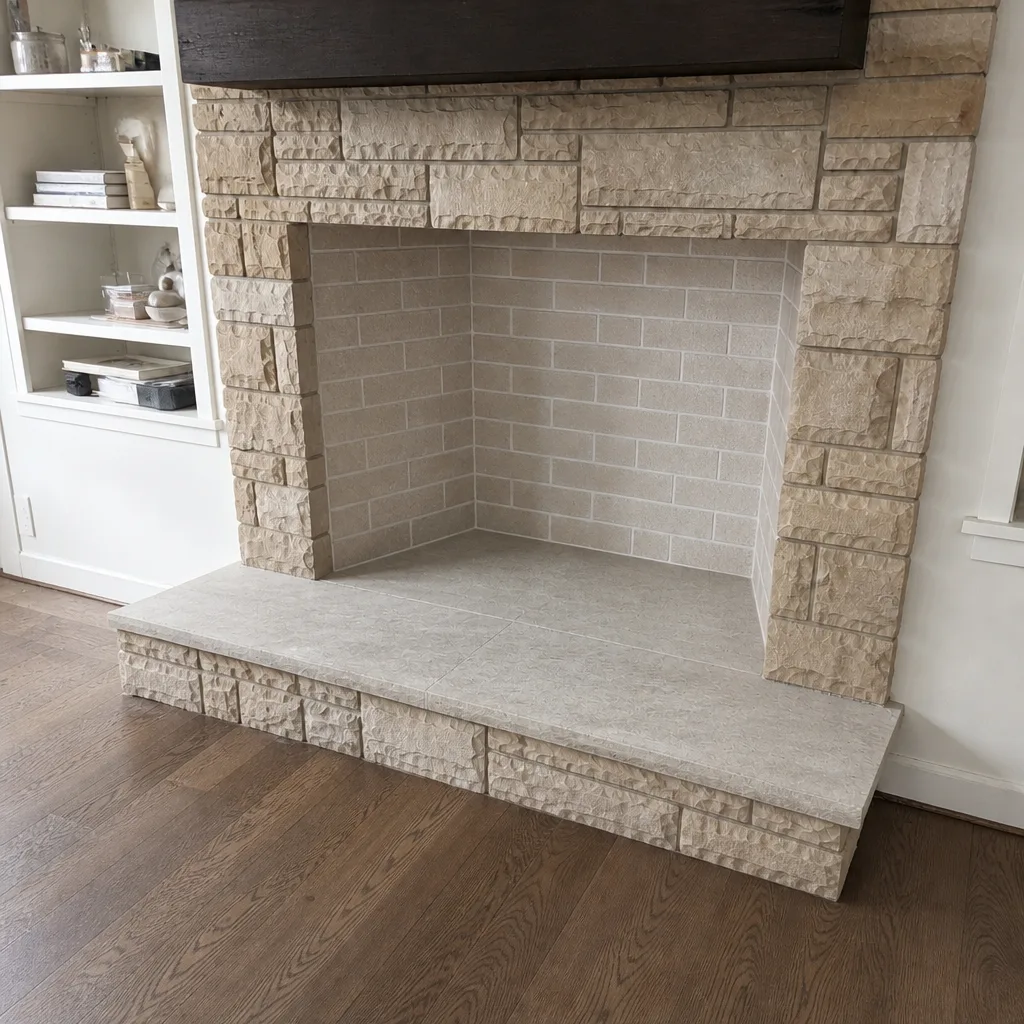
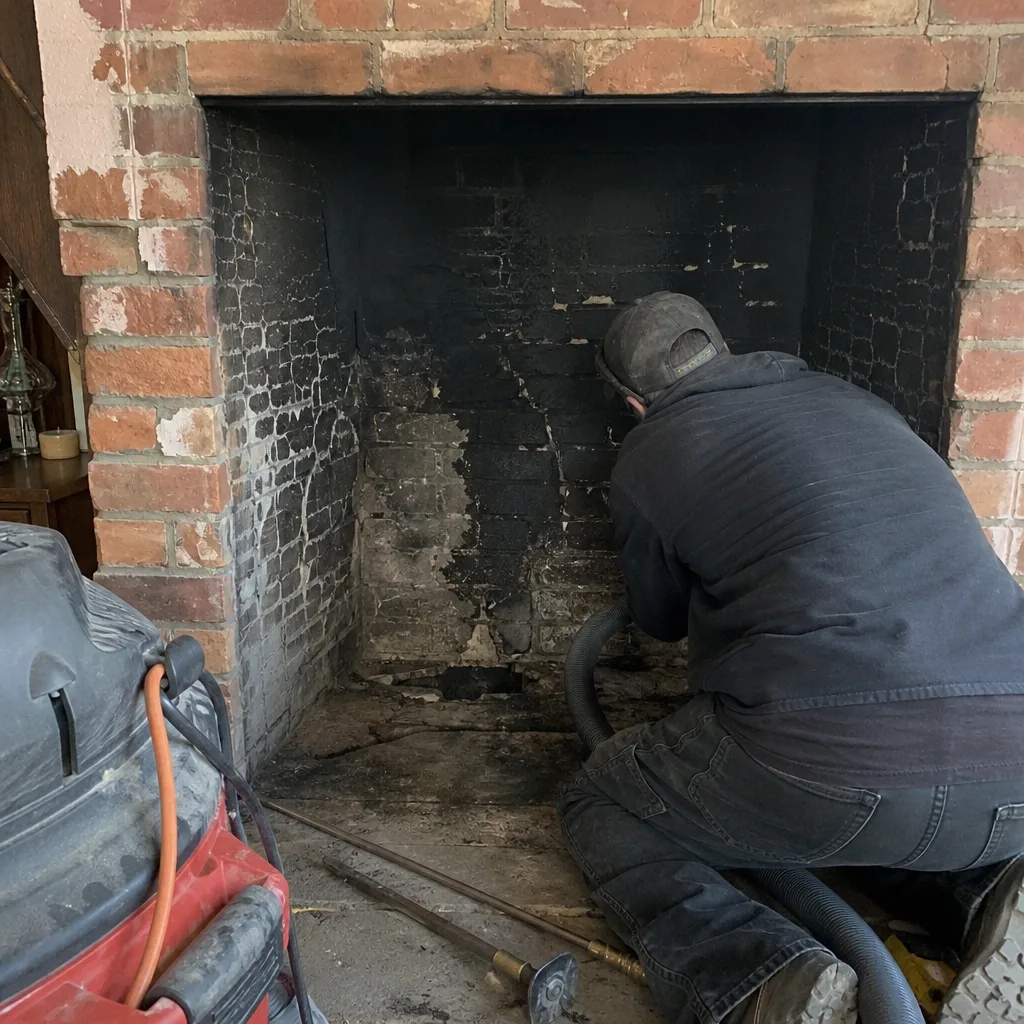
See the difference
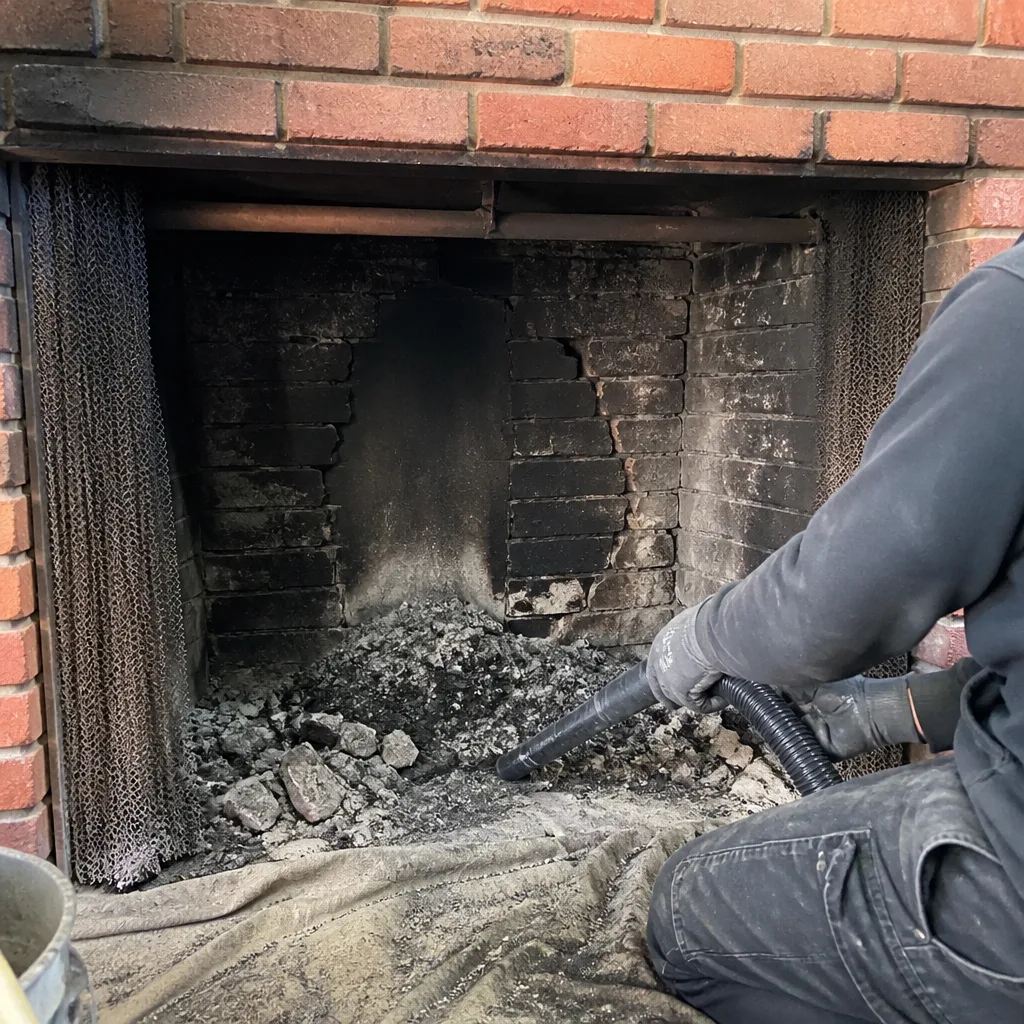 Before
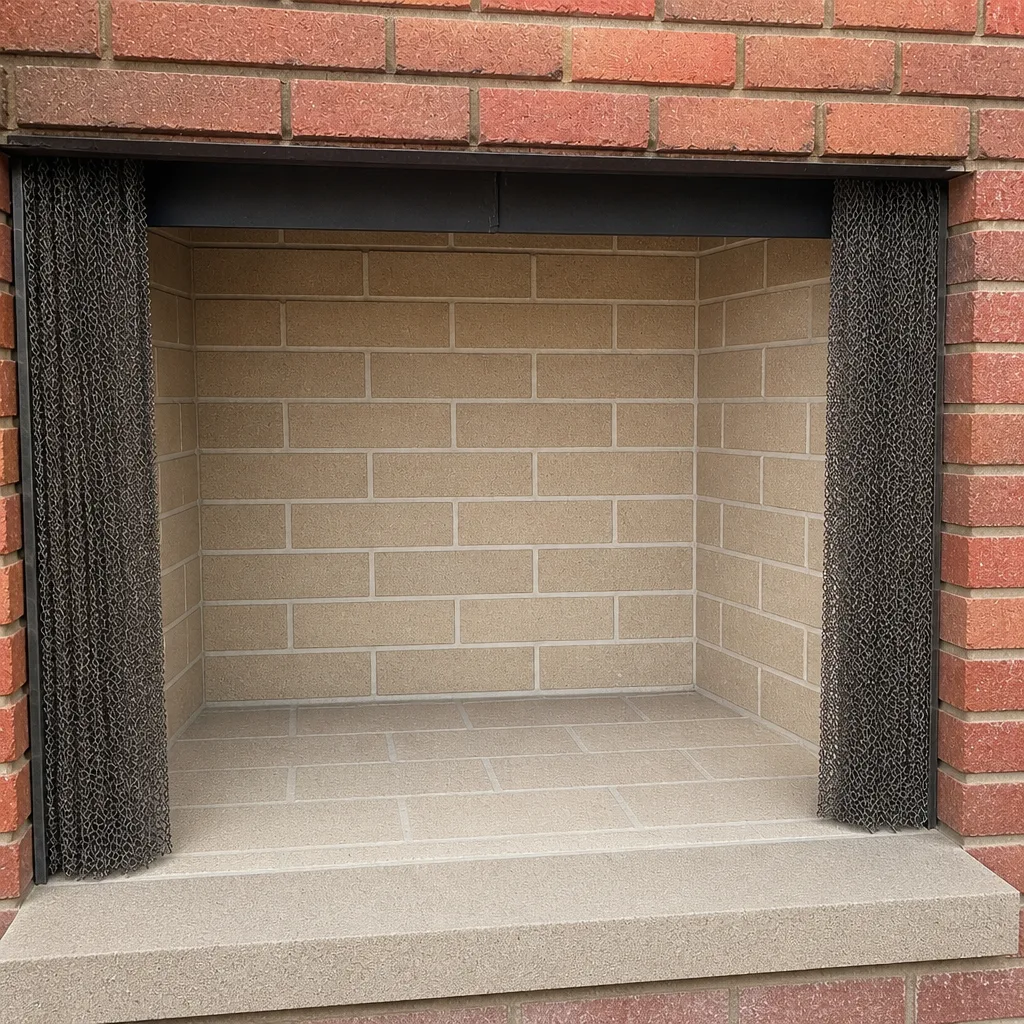 After
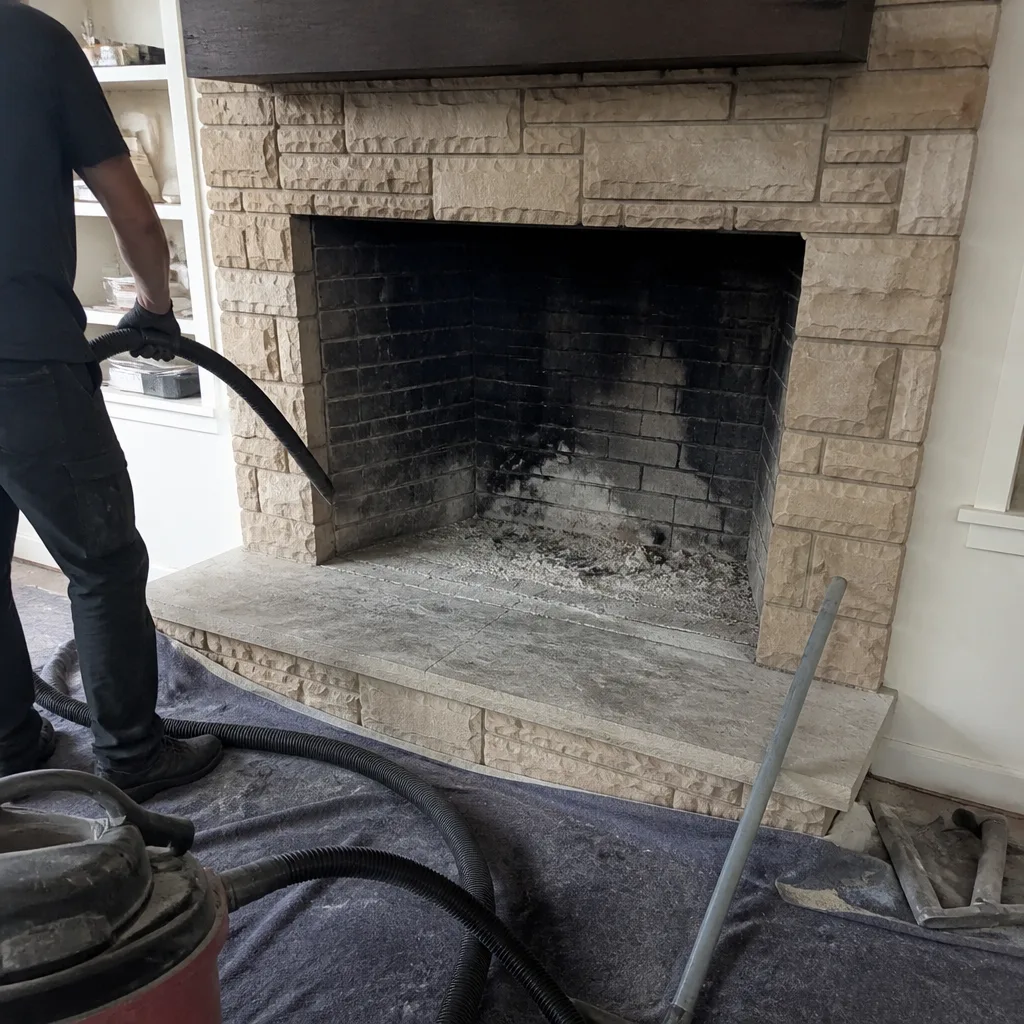 Before
 After
 Before
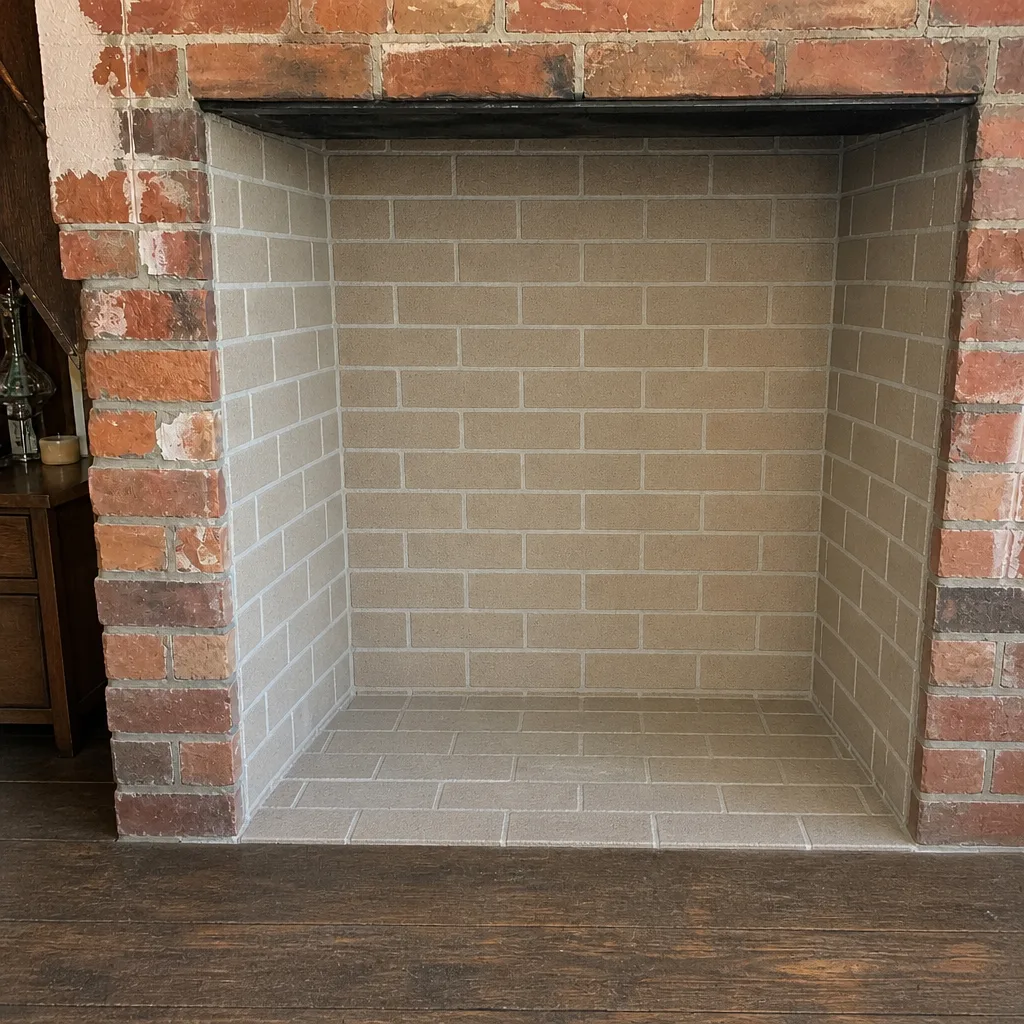 After
When to Call a Professional
Some jobs are worth scheduling, and some are worth calling about today. Call a professional immediately if you smell smoke in the house when you haven’t lit a fire, if the fire struggles to draw, if you see visible cracking in the firebox, if a CO alarm goes off anywhere near the fireplace or gas appliance, or if you have any doubt about your liner after a chimney fire. A glazed creosote layer, a missing cap screen, water stains on the chimney chase, and a gas insert that hasn’t been inspected in the last few years all deserve a professional visit before the next burn. Anything that involves getting on the roof to inspect or repair should also be a call, not a ladder job. Kansas City Chimney Cleaning offers free estimates in Kansas City. Call (866) 480-2930. We answer 24/7. Fast dispatch from 7am to 7pm, Sunday through Friday.
The right provider for scheduling is one who can do more than sweep. From sweep to structural repair, our crews work with DuraFlex liner systems, HeatShield resurfacing, and Gelco and Olympia Chimney components, so an inspection that finds an issue doesn’t turn into a referral to someone else. You can see the chimney sweep path and what a sweep visit actually covers.
Frequently Asked Questions
Inspect once a year and sweep whenever the inspection finds 1/8 inch or more of creosote, which for a household burning several times a week typically means an annual sweep. Occasional burners may go 2-3 years between sweeps. Gas appliance owners still need an annual inspection even though there’s nothing to sweep. Call (866) 480-2930 for an exact schedule assessment. Estimates are free.
Yes, if an inspection confirms the creosote depth is below the sweep threshold. A few fires per season on seasoned wood rarely trigger a sweep in a single year, and the inspection is what tells you definitively. Even at low burn rates, the annual inspection should stay on the calendar. Call (866) 480-2930 to book an inspection.
No. Gas fireplaces don’t produce the creosote that wood does, so there’s nothing for a standard sweep to remove. They absolutely still need an annual inspection for moisture, venting, and carbon monoxide concerns, which are the failure modes specific to gas. Call (866) 480-2930 to schedule an inspection for a gas appliance.
Two things typically happen. Creosote builds to a stage that requires professional removal rather than a routine sweep, and small liner cracks grown by freeze-thaw cycles can widen into structural problems, including a pathway for fire into the framing. Moisture damage compounds the same way. Call (866) 480-2930 for a camera inspection. Estimates are free.
It pushes it to two inspections a year for regular burners: late summer before the burn season, and late spring after it. The freeze-thaw cycle in January and February plus wet spring weather creates damage windows that a fall-only inspection misses. If you’re a low-frequency burner, one fall inspection is usually sufficient. Call (866) 480-2930 to book a seasonal visit.
Not the chimney itself, but it’s a fire-safety task worth doing on the same trip. Clogged dryer vents are one of the two leading causes of residential fire losses and they require the same professional tools and inspection discipline. Homeowners in Kansas City who schedule a chimney visit often add dryer vent cleaning at the same time. Call (866) 480-2930 to bundle both.
The Bottom Line
Build your chimney schedule around fuel type, burn frequency, appliance, and liner, not around a single annual rule. Wood burners get an inspection every year and a sweep when creosote reaches the trigger threshold. Gas appliance owners still get an annual inspection. Clay tile liners get more attention than stainless or resurfaced liners, and Kansas City’s freeze-thaw winters make the fall and late-spring inspection windows the ones worth protecting. Whatever the schedule says, an inspection you can see on camera is what separates a real maintenance plan from a hopeful one. We keep three service lines (sweep, repair, and dryer vent) under one provider because both categories of fire risk deserve a professional. For a maintenance schedule that fits your actual system, call Kansas City Chimney Cleaning at (866) 480-2930. We answer 24/7, and you can also reach us through Kansas City and our Kansas City Chimney Cleaning home page to book a free estimate.
Written by the team at Kansas City Chimney Cleaning.